27 August 2026
How the work is photographed
Every photograph on this site follows one rulebook, from window light and a square-on camera to a measure card in the first frame, so the pictures print true and the catalogue measures itself.
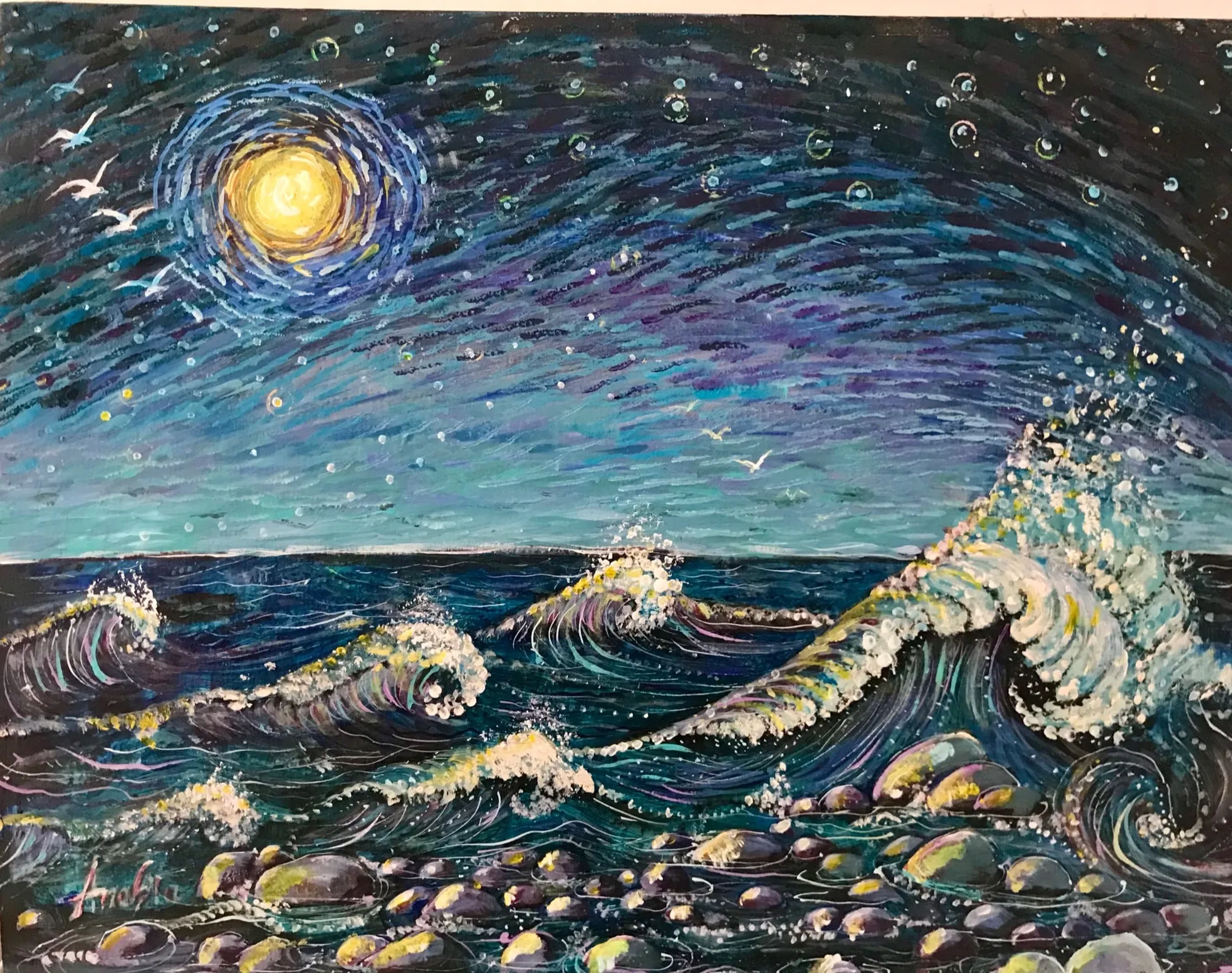
Photographs of paintings are unforgiving. A camera tilted by a few degrees turns a rectangle into a trapezium; a lamp in the wrong place leaves a white blot in the middle of a sky. So the studio now photographs every work to a written rulebook: soft daylight or two matched lamps at forty-five degrees, the camera level with the centre of the work, all four edges in the frame, no flash, and a printed measure card resting on the work in the first frame so that the real size is read from the photograph rather than typed.
The same rulebook sets the standard for prints. A print-grade photograph is taken on a tripod at the camera’s highest resolution, with a grey reference in the frame; only works photographed that way are offered as open editions, which is why the prints page is still short. As each work is re-photographed to that standard, its editions follow.
If you have photographed a work of Anahita’s for the catalogue in the past, you may notice it replaced by a cleaner image over the coming months. That is the rulebook at work.
Michael, for the studio